AI ads aren't the same
Within a week, OpenAI tested what ChatGPT users interpreted as ads in its output, but someone from OpenAI later clarified weren’t actually ads, and Google announced their ads will be going live in 2026.
Many are disappointed, few are surprised. It’s widely known monthly and yearly subscriptions aren’t covering research, development, inference, and operating costs, so advertising is an obvious and logical revenue stream.
Now that AI ads are upon us, let’s talk about them. There’s something particularly unsettling about AI ads, a sense that these ads are different, and I’d like a pick apart exactly why they’re different than other ads we’ve become accustomed to. My argument is that the same advertising rules should not apply. We shouldn’t accept AI ads simply “because there’s ads every where else in our lives” and “that’s how the world works.”
What makes AI a different type of technology?
Its an authority: We go to AI for answers, assistance, and guidance. We expect it to give us accurate, unbiased, unfiltered information.
It’s not media: So it shouldn’t be treated as media. Using AI isn’t the same as watching a Youtube clip or listening to a podcast. It’s a unique response generated specifically for us, in real-time.
Its output is highly suggestible and interference can be hidden from the user: AI output can be altered at a number of levels without the user’s awareness
It will ultimately have access to WAY more of our lives. AI promises helpful companionship and “always there assistance” throughout life. A Rons Gone Wrong type relationship would be very cool. But, opening your life up to an intelligence-driven, ambulatory, multi-sensory device, an AI-robot, is a whole new thing.
When we use AI, we’re getting unique, personalized output generated for us on-demand. Including advertising opens questions of impartiality. Of course, a Redditor has summed up the issue nicely:
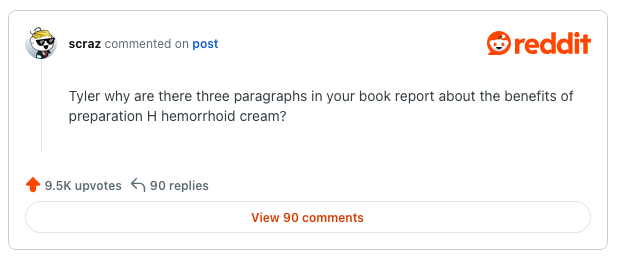
One use of AI is to help us find products. As AI ads become more prevalent, how can we trust that those answers are unbiased?
If an organization buys ads, not to promote a product, but to influence minds, how much influence could they have on AI’s responses and how transparent would that influence be?
No matter what incline it starts at, we know the slope is slippery
Of course, we know from historical patterns, that the first ads we see will be “okay.” They’ll be clearly labeled as ads. They won’t be included in the output, but will instead be separate. They won’t change the LLM’s output.
But, as consumers get more comfortable with that, new execs will come in and keep pushing for ads that are “more effective for advertisers” and we’ll see those initial boundaries we were okay with start to dissolve. First one company will offer ads that alter output without consumer disclosure, and the others will follow suit.
It’s a well-established pattern. Amazon introduced the Echo Show without display ads but has since added them. And we’re all familiar with how Google’s Search Ads have evolved into being less obviously indicated and taking up more of the search page real estate. Ads don’t become less instrusive over time, they only become more instrusive as a new round of execs come in determined to squeeze even more revenue out of their ad platform.